
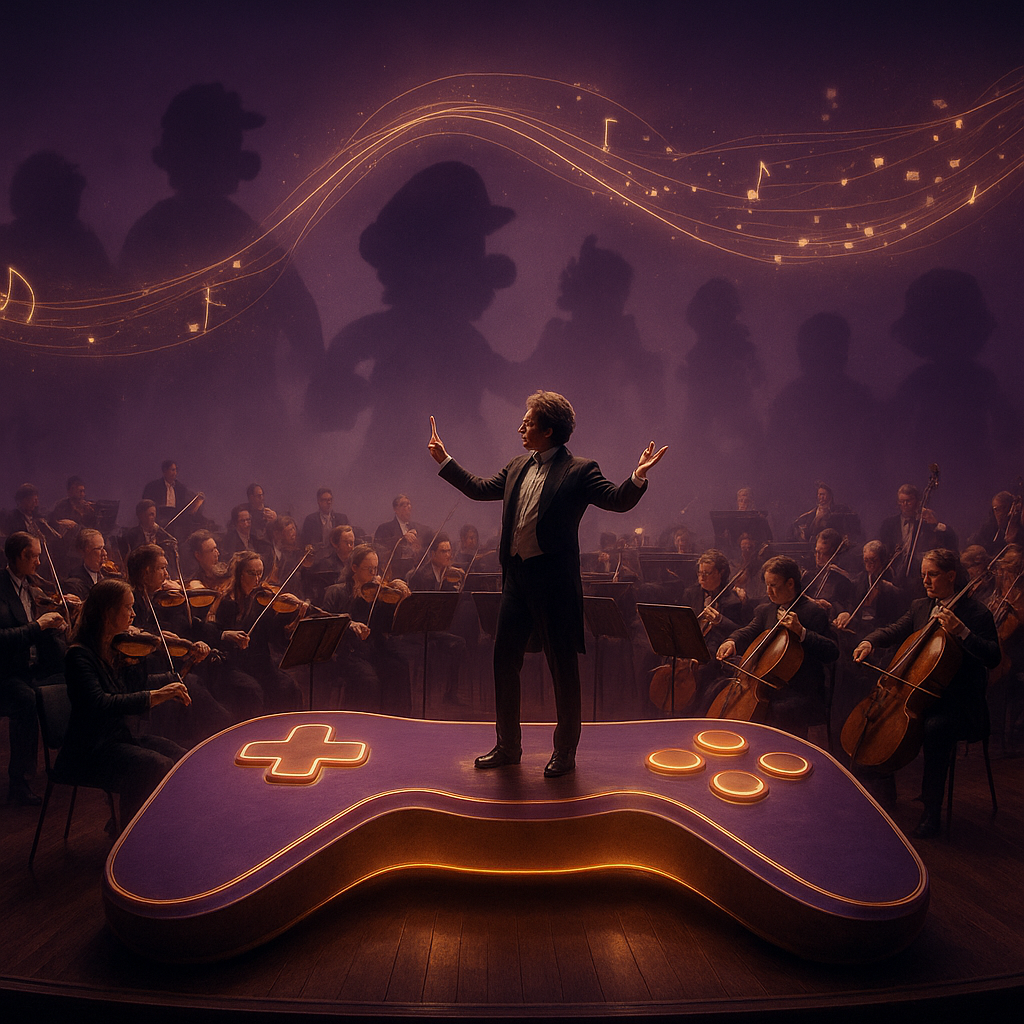
There’s a moment in almost every gamer’s life where a piece of music stops them in their tracks. Maybe it was the haunting piano melody of Silent Hill 2, or the orchestral swell of The Elder Scrolls V: Skyrim’s main theme. Perhaps it was the infectious chiptune loops of Super Mario Bros. that you found yourself humming in the school corridor without even realising it. Game soundtracks have always been more than background noise — they’ve been emotional architects, shaping how we feel, remember, and connect with virtual worlds. But somewhere along the way, they crossed a line. They stopped being confined to screens and speakers in darkened bedrooms and became a genuine cultural force, standing shoulder to shoulder with film scores and pop albums on the world stage.
This didn’t happen overnight. It’s the result of decades of technical innovation, artistic ambition, and a gaming audience that grew up and brought their passion for game music with them into the wider world. Understanding how we got here means tracing a fascinating journey — from the beeping constraints of early hardware to sold-out symphony halls and billions of streams.
The Humble Origins: When Limitations Sparked Creativity
In the early days of video games, music wasn’t a creative luxury — it was an engineering puzzle. The hardware of the late 1970s and early 1980s could only generate a handful of simultaneous audio channels, and composers had to work within those brutal constraints to produce something memorable. The result, paradoxically, was some of the most iconic music ever written.
Composers like Koji Kondo at Nintendo and Yuzo Koshiro at various Japanese studios became pioneers of what we now call chiptune — music crafted from the raw, synthetic tones of sound chips. Kondo’s work on Super Mario Bros. (1985) is perhaps the most studied example: a piece so rhythmically infectious and tonally cheerful that it remains universally recognisable nearly four decades later, even to people who have never picked up a controller.
What made these early composers extraordinary was their ability to compensate for technical limitations with pure melodic invention. Without the ability to use realistic instruments or complex harmonics, they relied on strong hooks, clever rhythmic patterns, and music that intuitively matched the pace and emotion of gameplay. The underground cave theme in Super Mario Bros. shifts to a minor key to signal danger; the overworld theme bursts with optimism. These weren’t accidents — they were deliberate emotional cues, and players absorbed them deeply.
The 16-Bit Renaissance and the Rise of the Composer as Artist
The transition to 16-bit hardware in the late 1980s and early 1990s opened new sonic possibilities. Consoles like the Super Nintendo Entertainment System (SNES) could produce richer, more layered sound, and composers seized the opportunity. This era produced some of gaming’s most beloved soundtracks — works that are still performed in concert halls today.
Yasunori Mitsuda’s score for Chrono Trigger (1995) is frequently cited as one of the greatest game soundtracks ever composed. Blending orchestral arrangements with Celtic and ethnic influences, Mitsuda created music that felt genuinely cinematic at a time when games were still largely dismissed as children’s entertainment. Similarly, Nobuo Uematsu’s work on the Final Fantasy series throughout this period elevated game music to something approaching classical composition — intricate, emotionally layered, and structurally ambitious.
It was during this era that the idea of the game composer as an artist in their own right began to take hold. Players weren’t just enjoying the music passively; they were seeking it out, purchasing soundtrack CDs (particularly common in Japan), and discussing compositions with the same enthusiasm they brought to the games themselves.
Why Did Certain Game Soundtracks Become So Memorable?
The psychology behind memorable game music is worth exploring, because it explains much of the cultural staying power these soundtracks have developed. Unlike film music, which accompanies a passive viewing experience, game music plays during active engagement. The player is making decisions, experiencing tension and relief, failing and succeeding — and the music is scoring all of it in real time.
This creates what psychologists sometimes refer to as contextual encoding — the music becomes tied not just to the game, but to the specific emotional experience of playing it. The moment you hear the Tetris theme, your brain doesn’t just recall the game; it recalls the anxiety of a tower approaching the top of the screen. This is why game music triggers such vivid nostalgic responses, often more intensely than film scores from the same period.
The CD Era and Full Orchestration: Games Sound Like Cinema
The arrival of CD-ROM technology in the mid-1990s was transformative. Suddenly, games could include fully orchestrated, recorded music rather than synthesised approximations. Developers began hiring real orchestras, and the gap between game soundtracks and film scores began to narrow dramatically.
Titles like Metal Gear Solid (1998) used cinematic scoring techniques to build tension and emotional weight, while the Legend of Zelda: Ocarina of Time (also 1998) wove music directly into gameplay mechanics — a move so elegant that it remains a high watermark for interactive sound design. Koji Kondo composed a score where the player literally plays instruments in-world, making the music a narrative and mechanical element simultaneously.
By the early 2000s, game soundtracks were winning industry awards, attracting serious critical attention, and occasionally crossing into mainstream consciousness. The Halo series, with Martin O’Donnell’s choral and orchestral compositions, brought a genuinely epic grandeur to a first-person shooter — a genre previously not known for musical ambition.
Game Music Goes Live: The Concert Hall Phenomenon
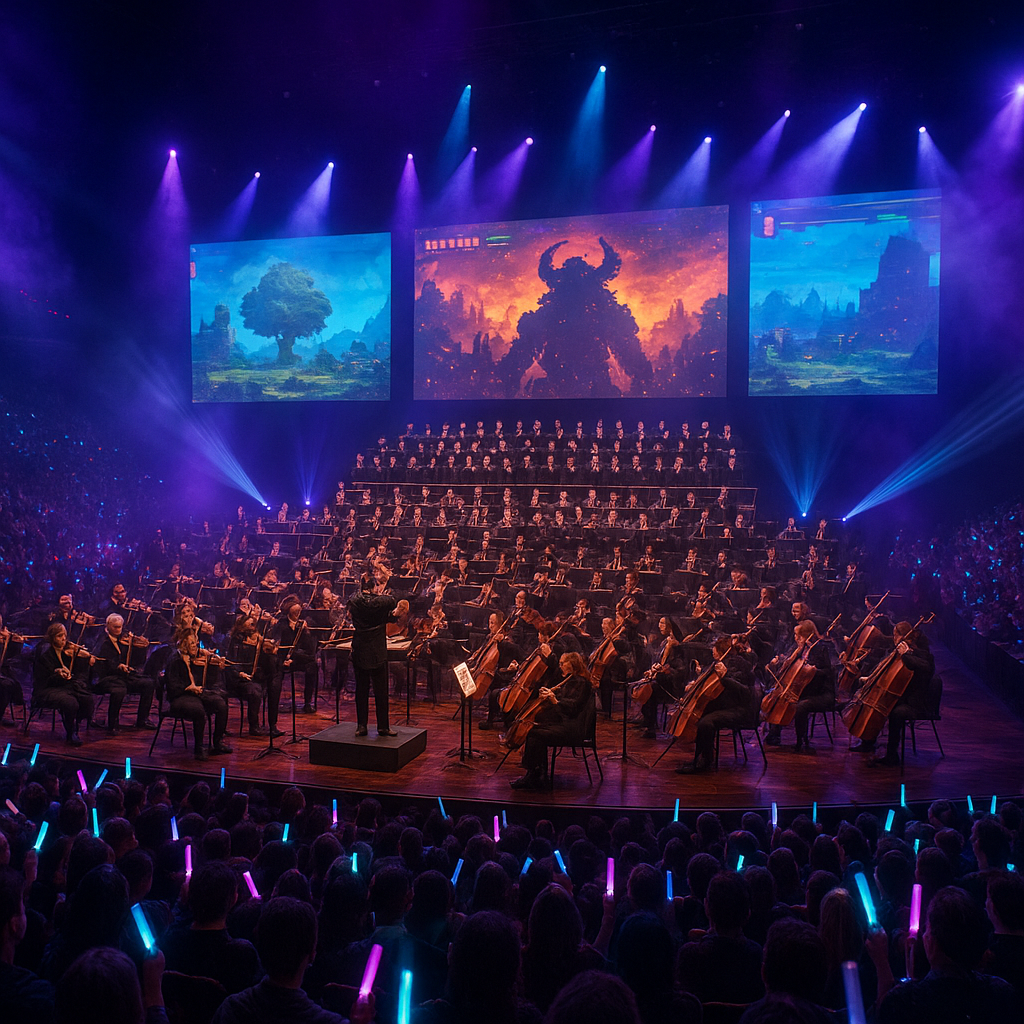
One of the clearest indicators that game soundtracks had achieved genuine cultural status was their migration to the concert stage. The first dedicated video game music concert, Play! A Video Game Symphony, launched in 2006, and similar events quickly followed. Video Games Live, launched by Tommy Tallarico and Jack Wall, toured internationally and sold out prestigious venues including the Royal Albert Hall in London.
Nintendo’s own The Legend of Zelda: Symphony of the Goddesses world tour ran for years, performing to audiences of thousands in major cities across Europe, North America, and beyond. These weren’t niche gatherings of hardcore fans in convention centres — they were full orchestral productions in serious classical music venues, reviewed by mainstream arts journalists.
Today, institutions like the BBC Proms have featured video game music. The BBC Philharmonic has recorded dedicated game music albums. What was once dismissed as “bleeping and blooping” is now performed by some of the finest orchestras in the world.
How Has Streaming Changed the Reach of Game Soundtracks?
The rise of music streaming platforms has been enormously significant for game soundtracks. Platforms like Spotify and Apple Music have made it trivially easy for players to listen to their favourite game scores outside of gameplay, and the numbers tell a compelling story. Minecraft’s soundtrack by C418 has accumulated hundreds of millions of streams. The Stardew Valley score, composed entirely by solo developer Eric Barone (ConcernedApe), has developed a devoted listenership of people who have never played the game. Journey’s Grammy-nominated score by Austin Wintory is regularly streamed by classical music fans who stumbled upon it through algorithm recommendations.
Streaming has also enabled discovery in ways that physical media never could. A teenager in Manchester might discover Uematsu’s work through a playlist recommendation; a classical music enthusiast in Birmingham might encounter Jesper Kyd’s historical compositions through Assassin’s Creed and find themselves drawn into gaming. The cultural traffic is flowing in multiple directions simultaneously.
The Modern Era: Genre-Defying Scores and Global Recognition
Contemporary game music has become almost impossible to categorise. Persona 5’s soundtrack by Shoji Meguro blends jazz, funk, and J-pop into something wholly unique. Nier: Automata’s score by Keiichi Okabe features choral arrangements that shift between Japanese and fictional constructed languages. Red Dead Redemption 2 employed a roster of artists including Woody Jackson and D’Angelo to create music that feels authentically rooted in Americana and blues traditions.
The Grammy Awards have acknowledged this shift. While a dedicated “Best Video Game Score” category still does not exist at the Grammys (a persistent point of frustration among enthusiasts), game soundtracks have received nominations in existing categories. The BAFTA Games Awards and The Game Awards both have dedicated music categories, and the composers who win them are increasingly celebrated figures within the broader music world.
Notable developments in the modern landscape include:
- Collaborations between game studios and major recording artists — Cyberpunk 2077 featured original tracks from Run the Jewels, Grimes, and other prominent artists integrated directly into the game world.
- Adaptive music technology — Modern engines allow soundtracks to shift and respond to player actions in real time, creating a genuinely interactive musical experience that no other medium can replicate.
- Independent composers gaining mainstream recognition — Composers like Lena Raine (Celeste, Minecraft) have built significant profiles outside gaming, with their work discussed in mainstream music publications. For those curious about how indie studios approach game development, music is often central to establishing a game’s identity from the very earliest stages.
- Lo-fi and ambient game music as a listening genre — YouTube channels and Spotify playlists dedicated to relaxing game music have tens of millions of subscribers and followers, signalling that game music has become a lifestyle listening choice, not just a gaming accompaniment.
Why Game Music Resonates Beyond Gaming
It would be easy to attribute the cultural rise of game soundtracks purely to nostalgia — a generation of gamers growing up and bringing their childhood music with them. And nostalgia is certainly part of the story. But it doesn’t fully explain why people who have never played Final Fantasy VII still find themselves moved by its score, or why orchestras programme game music alongside Beethoven and Brahms.
The deeper truth is that the best game soundtracks are simply great music. They were composed with craft, intention, and emotional intelligence, and they function as standalone artistic works. The fact that they were created to serve an interactive medium doesn’t diminish their musical value — if anything, the constraints and demands of that medium pushed composers to develop unique skills in emotional pacing, thematic development, and tonal variety that have enriched the wider musical landscape.
Game music has also served as a gateway. Countless musicians and composers have cited game soundtracks as their first serious engagement with orchestral or electronic music. The next generation of film composers, recording artists, and classical musicians grew up listening to Uematsu and Kondo, and those influences are beginning to make themselves felt across the industry.
Conclusion
Game soundtracks have travelled an extraordinary distance from the beeping tones of early arcade machines to sold-out symphony halls and billions of streams on global platforms. What began as a functional necessity — giving players audio feedback during gameplay — evolved into a sophisticated art form with its own history, canon, and cultural weight. The composers who built this tradition, working within severe technical limitations and often without the recognition their film score counterparts enjoyed, created music that has proved remarkably durable and deeply meaningful to audiences around the world.
The cultural legitimacy of game music is no longer a matter of debate. It is performed by major orchestras, studied in music programmes, and streamed by audiences who may never have held a controller. It has influenced mainstream pop, electronic music, and film scoring. And as games themselves continue to grow in ambition and cultural reach, the music that accompanies them will only continue to develop in sophistication and impact. For those who grew up humming those early melodies, it’s a thoroughly satisfying conclusion to a story that began in some very small, very loud arcade cabinets.