
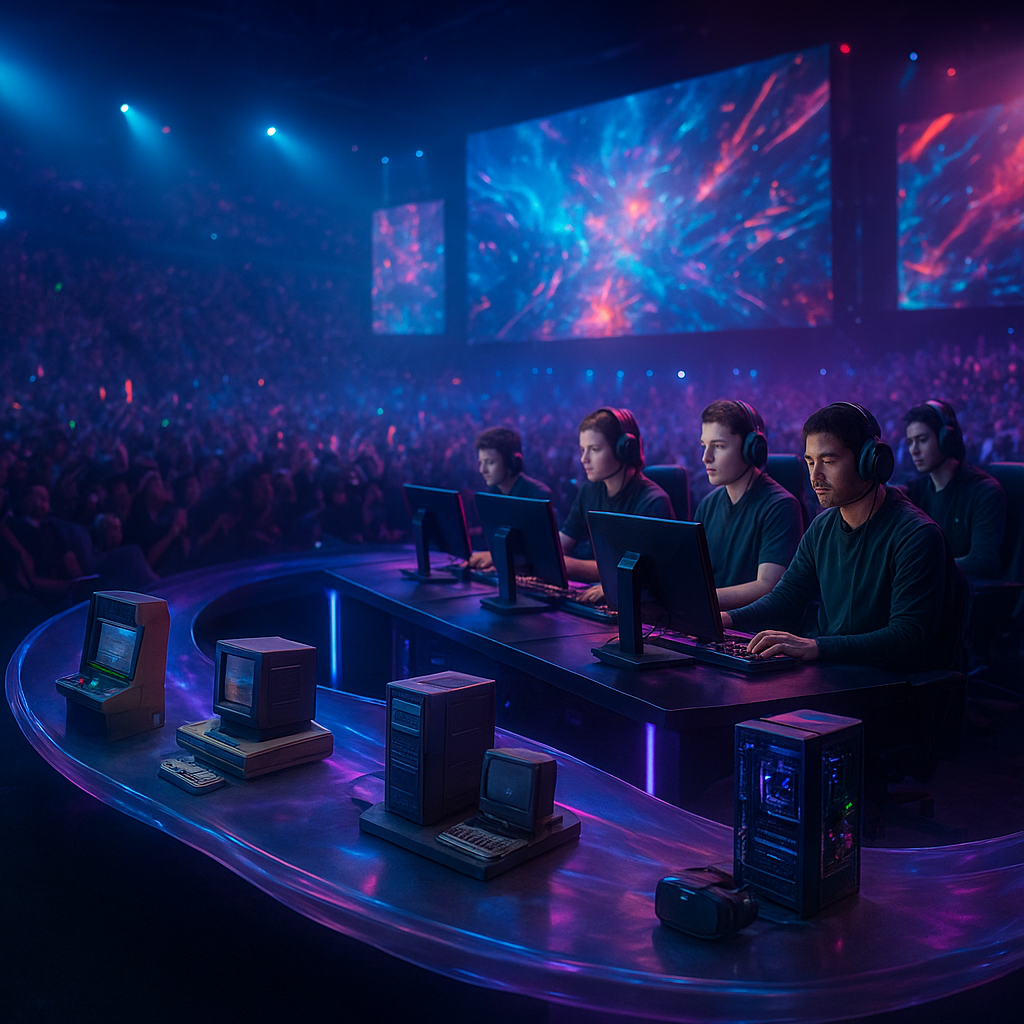
Competitive gaming has come a long way from a handful of university students huddled around a single terminal. What began as informal bragging rights over pixelated high scores has transformed into a global industry worth billions of pounds, filling stadiums and drawing viewership numbers that rival traditional sports. The journey from those early experiments to the polished, professional ecosystem we see today is one of the most fascinating stories in modern entertainment — and it’s still being written.
Whether you’re a lifelong gamer who remembers the arcade era or someone who recently stumbled onto an esports broadcast and wondered how it all started, this full timeline covers the key moments that shaped competitive gaming into what it is today.
The Very Beginning: 1970s and the First Competitive Events
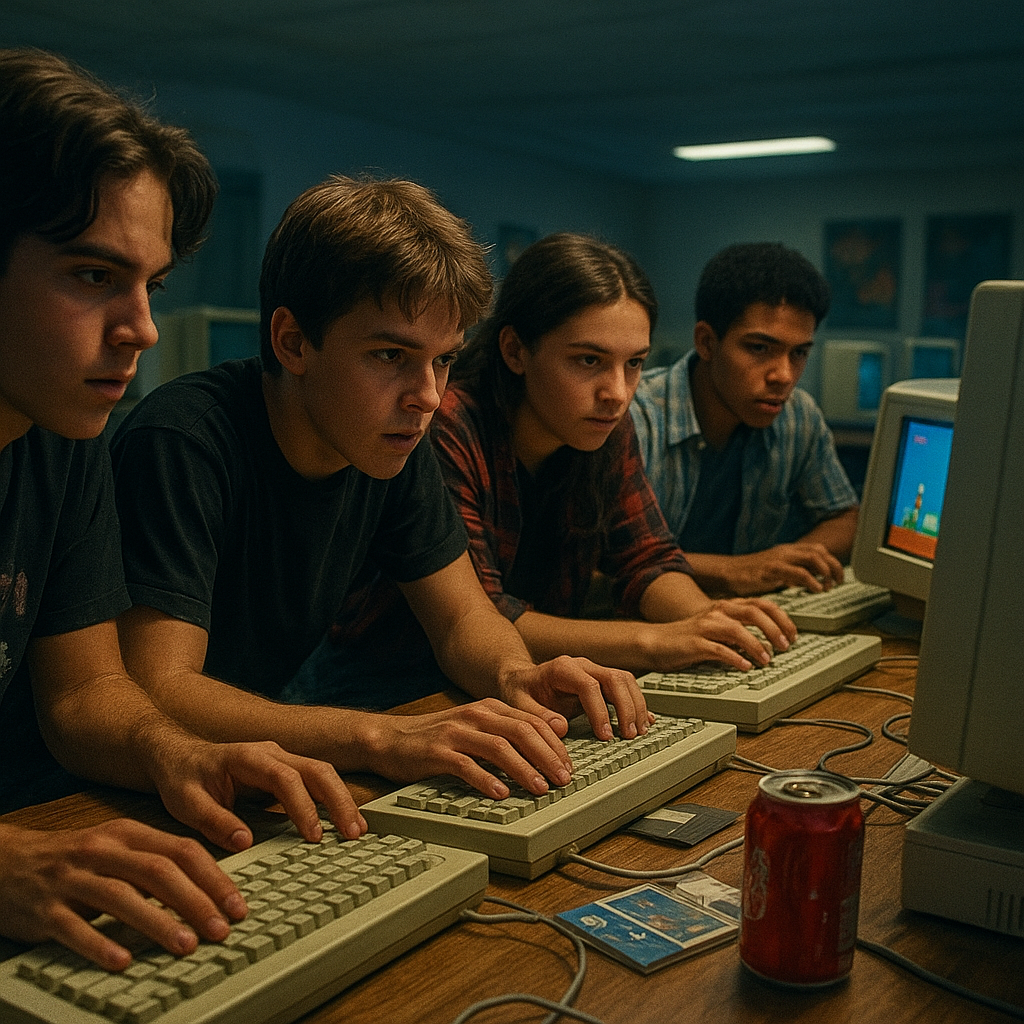
The story of competitive esports doesn’t start with the internet or streaming platforms — it starts in 1972, at Stanford University in California. On the 19th of October that year, students gathered to compete in Spacewar!, one of the earliest video games ever created. The prize? A year’s subscription to Rolling Stone magazine. Humble beginnings, certainly, but it marked the very first organised video game competition in recorded history.
So, what was the first competitive esport? Most historians point to that 1972 Stanford event as the official starting gun. However, it was the launch of the arcade era in the late 1970s that truly brought competitive gaming to the masses. Games like Space Invaders, Pac-Man, and Donkey Kong introduced the concept of high scores — a simple but powerful mechanic that encouraged players to outperform one another.
In 1980, Atari hosted the Space Invaders Championship, which attracted over 10,000 participants across the United States. This was arguably the first large-scale esports tournament, and it demonstrated just how hungry people were for structured competitive gaming.
The 1980s and 1990s: Laying the Groundwork
The Console Revolution and Twin Galaxies
The 1980s brought home consoles into living rooms worldwide, and with them came a new generation of competitors. Twin Galaxies, founded in 1981 by Walter Day, became the world’s first official video game scoreboard and referee organisation. It documented world records and lent legitimacy to the idea that gaming performance could be tracked, verified, and celebrated.
The famous King of Kong controversy surrounding Donkey Kong records — while it played out over decades — has its roots in this era. Twin Galaxies made it possible for players to compete without being in the same room, which was a radical concept at the time.
The Rise of Fighting Games and LAN Parties
The early 1990s introduced a genre that would become synonymous with competitive gaming: the fighting game. Street Fighter II, released in 1991, sparked a culture of head-to-head competition in arcades around the world. Players would travel across cities — sometimes countries — just to test their skills against others. The game’s mechanics were deep enough to reward genuine mastery, setting the template for competitive titles for years to come.
Meanwhile, the proliferation of home PCs and local area network (LAN) technology gave rise to LAN parties — gatherings where players would lug their desktop computers to a venue, connect them together, and compete in games like Quake, Doom, and later Counter-Strike. These events were grass-roots, community-driven, and absolutely pivotal to the culture of competitive gaming.


When did competitive gaming become popular? The late 1990s represent the period when it began gaining genuine traction. South Korea, in particular, became a hotbed of competitive gaming culture, largely due to the meteoric rise of StarCraft: Brood War. By 1998, professional StarCraft leagues were forming, and matches were being broadcast on dedicated television channels. Korean players became national celebrities, and the concept of the professional gamer was born in earnest.
The 2000s: Esports Goes Global
The Birth of Organised Leagues and Tournaments
The 2000s were a transformative decade. The internet was becoming fast enough to support online multiplayer, and organisations began formalising competitive structures. The Cyberathlete Professional League (CPL) and the Electronic Sports World Cup (ESWC) emerged as early pillars of international competition, hosting events in games like Counter-Strike, Quake III Arena, and Warcraft III.
Major League Gaming (MLG) was founded in 2002 in the United States, bringing a sports-league format to console gaming with titles like Halo 2 and later Call of Duty. This was significant because it signalled that competitive gaming wasn’t just a PC phenomenon — console players were just as hungry for structured competition.
World of Warcraft and the MMO Effect
The launch of World of Warcraft in 2004 introduced millions of players to a shared competitive space, with arena PvP and structured guild competitions creating their own competitive ecosystems. While MMOs weren’t traditional esports in the tournament sense, they cemented the idea that gaming could be a long-term, deeply invested hobby rather than a casual pastime — something that would fuel the broader competitive community.
The 2010s: The Streaming Era and Mainstream Acceptance
League of Legends, Dota 2, and the MOBA Takeover
The launch of League of Legends in 2009 — and its extraordinary free-to-play success in the early 2010s — reshaped the competitive landscape entirely. By 2012, the League of Legends Season 2 World Championship drew over 8,000 fans to the USC Galen Centre in Los Angeles, with millions more watching online. The following year, the Season 3 World Championship in South Korea attracted 32 million viewers — a number that shocked mainstream media and signalled that esports was no longer a niche pursuit.
Dota 2‘s The International tournament, launched by Valve in 2011, introduced another landmark moment: crowd-funded prize pools. By 2019, The International’s prize pool had reached over $34 million USD, becoming the largest prize pool in esports history at that point. These figures made it impossible for sceptics to dismiss competitive gaming as a passing trend.
Twitch and the Streaming Revolution
The launch of Twitch in 2011 fundamentally changed how people engaged with competitive gaming. Suddenly, anyone could watch professionals play in real time, interact with communities, and follow their favourite players the way one might follow a football club. By 2014, Amazon had acquired Twitch for approximately $970 million USD — a deal that underscored just how commercially significant gaming viewership had become.
YouTube Gaming and later platforms like Facebook Gaming entered the space, creating a competitive streaming market that benefited creators and viewers alike. Personalities like Ninja, Shroud, and Pokimane became household names, blurring the lines between competitive play and entertainment.
Overwatch League and the Franchise Model
In 2018, Blizzard launched the Overwatch League (OWL), bringing a traditional sports franchise model to esports. City-based teams, salaried players with benefits, and broadcast deals with ESPN and Disney XD gave esports a level of mainstream credibility it had never quite achieved before. Franchise slots reportedly sold for between $20 million and $60 million USD — figures that placed esports firmly in the territory of traditional sports franchises.
The 2020s: Consolidation, Battle Royales, and New Frontiers
The Impact of the Global Pandemic
When COVID-19 brought traditional sports to a standstill in 2020, esports experienced a notable surge in viewership. Online tournaments filled the void left by cancelled football seasons and postponed Olympics events. Broadcasting networks that had previously overlooked gaming suddenly took an active interest, and sponsorship from non-endemic brands — car manufacturers, fast food chains, financial institutions — accelerated significantly.
Battle Royales, Mobile Esports, and New Platforms
Games like Fortnite and PUBG brought the battle royale genre to the forefront of competitive gaming. Fortnite‘s World Cup in 2019 awarded $30 million in prize money across its events, with 16-year-old Kyle “Bugha” Giersdorf taking home $3 million for the solo event — an extraordinary moment for the visibility of esports.
Mobile gaming has also become an increasingly significant competitive force, particularly in Southeast Asia, South Asia, and the Middle East. Games like PUBG Mobile, Free Fire, and Mobile Legends: Bang Bang have their own thriving competitive ecosystems, reflecting how esports has grown into a genuinely global, multi-platform phenomenon.
Understanding the Appeal: Why Has Esports Grown So Quickly?
Several factors have driven the extraordinary growth of competitive gaming:
- Accessibility: Unlike traditional sports, many competitive games are free to play and require only a device most people already own.
- Global reach: Online infrastructure means players from any country can compete against one another without leaving home.
- Community: Streaming platforms have built passionate, interactive communities around games and players.
- Prize money and career opportunities: The financial rewards available to top players have made professional gaming a viable career aspiration.
- Recognisable narratives: Esports has embraced storytelling — rivalries, upsets, dynasties — that gives fans emotional investment beyond the games themselves.
It’s also worth noting that competitive gaming appeals to a wide range of personalities and cognitive styles. The question of why ADHD individuals love gaming comes up frequently, and research suggests that fast-paced, reward-driven environments — like those found in competitive games — can be particularly engaging for people whose brains respond strongly to immediate feedback and stimulation. This isn’t a universal rule, but it highlights how gaming can serve as a genuinely meaningful outlet for a diverse range of people.
Key Milestones at a Glance
- 1972: First recorded video game competition at Stanford University (Spacewar!)
- 1980: Atari hosts the Space Invaders Championship with 10,000+ participants
- 1981: Twin Galaxies founded, establishing official world records
- 1991: Street Fighter II launches the competitive fighting game era
- 1998: StarCraft professional leagues launch in South Korea
- 2002: Major League Gaming founded
- 2011: Twitch launches; Dota 2’s The International debuts
- 2013: League of Legends Season 3 World Championship draws 32 million viewers
- 2018: Overwatch League introduces city-based franchise model
- 2019: Fortnite World Cup awards $30 million in prize money
- 2020–present: Pandemic accelerates mainstream adoption; mobile esports surges globally
Conclusion
The history of competitive esports gaming is, at its heart, a story about human beings seeking connection, challenge, and recognition through play. What started as a curiosity in a university computing lab has grown into a globally recognised industry with professional athletes, multi-million pound tournaments, and audiences that rival those of traditional sports. From the arcades of the 1980s to the packed stadiums and live-streamed finals of today, every era has added something essential to the tapestry of competitive gaming. Understanding this history not only gives context to the spectacle of modern esports — it offers a genuine appreciation for how far the world of competitive play has come, and how much further it still has to go.