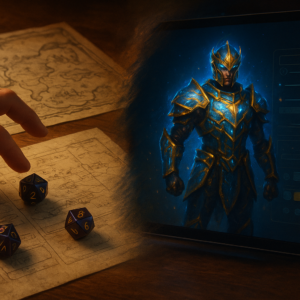
Video games have come a long way from the days of simple high-score chasing and pixelated obstacles. Today, some of the most emotionally resonant, thought-provoking stories in any medium are being told through games. Whether it’s the haunting tragedy of The Last of Us, the philosophical weight of NieR: Automata, or the quiet intimacy of Celeste, narrative storytelling in video games has evolved into a genuine art form — one that’s fundamentally different from film, books, or television in ways that are worth understanding deeply.
This guide explores how narrative storytelling works in games, what makes it unique, and why it continues to push the boundaries of how we experience stories.
What Makes Video Game Storytelling Unique?
At its core, the difference between video game storytelling and every other form of narrative comes down to one word: agency. When you watch a film, you’re an observer. When you read a novel, you follow the author’s path. But in a video game, you are the protagonist — or at least an active participant in their world.
This interactivity fundamentally changes how stories are experienced. The emotional weight of a decision hits differently when you’re the one pressing the button. The grief of losing a character feels more personal when you’ve spent dozens of hours guiding them through danger. Games don’t just tell you a story — they make you live inside one.
According to a 2023 report by Newzoo, the global gaming market surpassed $180 billion in revenue, with narrative-driven titles consistently ranking among the best-selling and most critically acclaimed games of each year. This reflects a growing appetite not just for gameplay mechanics, but for meaningful, story-rich experiences.
The Four Pillars of Game Narrative
Most video game narratives are built on a combination of four interconnected elements:
- Plot: The overarching story — what happens, in what order, and why it matters.
- Character: The people (or beings) that inhabit the world and drive emotional investment.
- World-building: The lore, history, and environment that give the story context and depth.
- Player agency: The degree to which player choices shape or influence the narrative.
The best narrative games balance all four. A rich world with a dull plot falls flat. Compelling characters trapped in a linear, unresponsive story can feel wasted. It’s the interplay between these elements that creates something truly memorable.
The Evolution of Storytelling in Video Games
To appreciate where game narratives are now, it’s worth understanding how they got here. Early video games had almost no narrative to speak of — Pong didn’t need a plot. But as hardware capabilities expanded in the 1980s and 1990s, developers began experimenting with story as a feature rather than an afterthought.
Text-based adventure games like Zork (1977) were among the first to place storytelling at the centre of the experience. Players navigated worlds entirely through written descriptions, making choices by typing commands. It was primitive by modern standards, but it established a crucial idea: games could be narrative spaces.
The 16-bit era brought richer stories through JRPGs like Final Fantasy VI and Chrono Trigger, which tackled themes of mortality, identity, and political corruption with surprising sophistication. The PlayStation era then exploded the possibilities with titles like Metal Gear Solid and Final Fantasy VII, introducing cinematic cutscenes, complex villain motivations, and moments that genuinely shocked players.
By the 2000s and 2010s, narrative design had become a recognised discipline in game development. Studios like Naughty Dog, CD Projekt Red, and Telltale Games built their entire reputations around story-first game development. Today, games like Red Dead Redemption 2, Disco Elysium, and Hades are frequently cited alongside the finest works of literary fiction — not hyperbole, but a genuine reflection of how far the medium has matured. Much like records became a defining cultural format in their own era, video games have grown from a novelty into a respected storytelling medium.
Key Narrative Techniques Used in Video Games
Game writers and narrative designers have developed a toolkit of techniques that are unique to — or significantly adapted for — the interactive medium. Understanding these methods helps explain why certain games hit so hard emotionally.
Environmental Storytelling
Some of the most powerful storytelling in games isn’t delivered through dialogue or cutscenes — it’s embedded in the environment itself. Dark Souls is perhaps the most famous example: its lore is almost entirely told through item descriptions, architecture, and enemy placement. Players piece together a rich, tragic history through exploration and observation.
Environmental storytelling rewards curiosity. A blood-stained diary in a corner, a family photo on a broken mantelpiece, or a child’s drawing pinned to a wall in a post-apocalyptic ruin — these details build emotional texture without a single word of exposition.
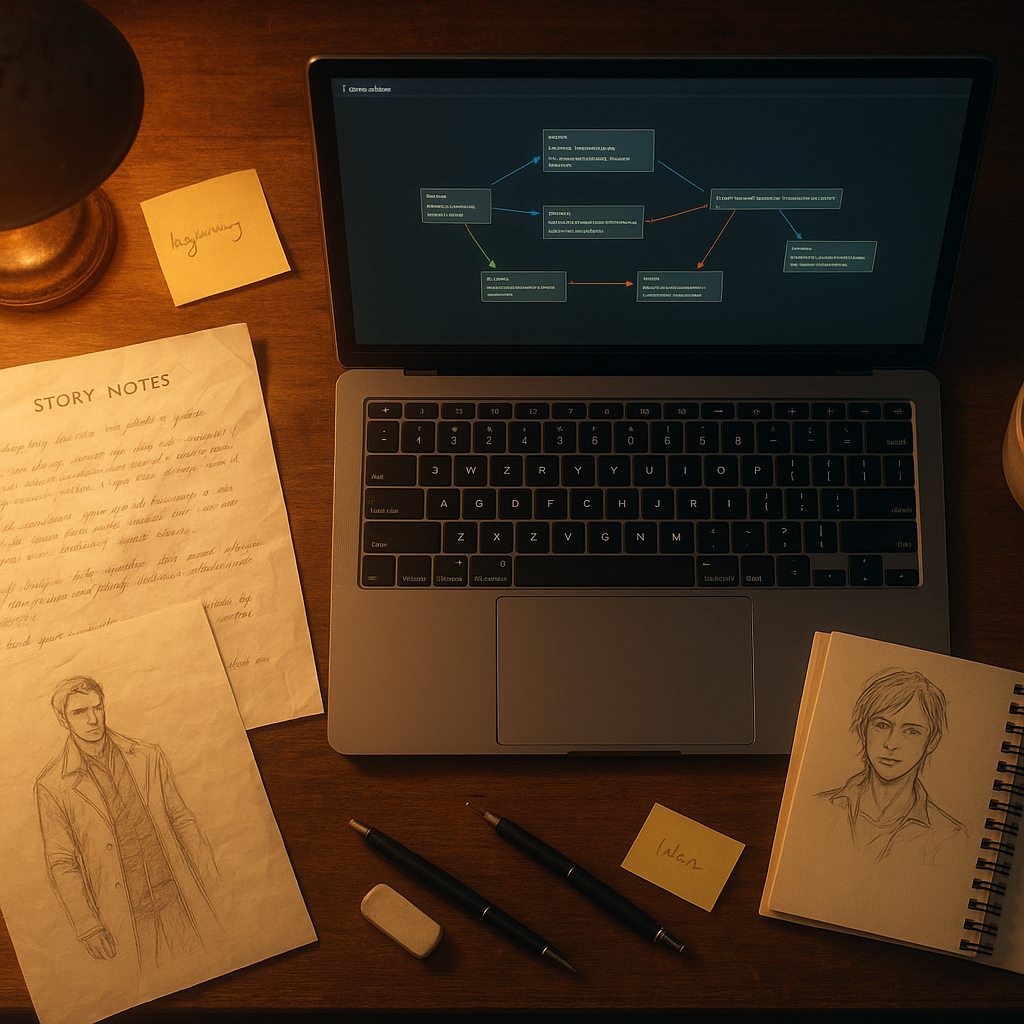
Branching Narratives and Player Choice
Branching narratives give players the ability to influence the story’s direction through decisions. Games like Mass Effect, The Witcher 3, and Detroit: Become Human built entire systems around meaningful choice, where decisions made early in the game ripple outward with consequences that may not become apparent until hours later.
The challenge with branching narratives is enormous from a writing standpoint. Every branch must feel purposeful, and the tonal consistency of the story must be maintained across wildly different paths. Done well, branching narratives create a sense of genuine ownership over the story. Done poorly, they can feel like an illusion — a set of cosmetic choices that ultimately change nothing.
The Unreliable Narrator
Games have found fascinating ways to deploy unreliable narrators. BioShock Infinite, Spec Ops: The Line, and Undertale all subvert player expectations by questioning the reliability of the perspective you’ve been given. In some cases, the game itself becomes the unreliable narrator, using gameplay mechanics to reinforce narrative deception in ways that only the interactive medium can achieve.
Ludonarrative Harmony (and Dissonance)
Ludonarrative refers to the relationship between a game’s mechanics and its story. When these elements align — when what you’re doing in the game reinforces what the story is saying — it creates ludonarrative harmony. Celeste, for instance, uses its brutally difficult platforming mechanics as a direct metaphor for its protagonist’s struggle with anxiety and depression. The gameplay is the narrative.
Ludonarrative dissonance, on the other hand, occurs when mechanics and story contradict each other — a classic example being the “Rambo Lara” criticism of early Tomb Raider reboots, where the story portrayed Lara as traumatised by violence whilst the gameplay encouraged players to gleefully slaughter hundreds of enemies. Narrative designers increasingly try to close this gap.
Examples of Exceptional Narrative Storytelling in Video Games
Looking at standout examples helps illustrate what’s possible when narrative design is treated as a central priority:
- The Last of Us (2013): A masterclass in character-driven storytelling, exploring grief, love, and moral ambiguity through a post-apocalyptic lens. The relationship between Joel and Ellie remains one of gaming’s most emotionally complex.
- Disco Elysium (2019): A purely dialogue-driven RPG with virtually no combat, built around a politically rich world and one of gaming’s most unusual protagonists. It treats players as intellectually capable adults in a way few games dare to.
- Hades (2020): Cleverly weaves narrative into its roguelike structure, ensuring that every run — win or lose — advances the story. Character relationships deepen with repetition rather than fatigue.
- What Remains of Edith Finch (2017): A walking simulator that uses the game’s format itself as a storytelling device, each family member’s story told through a different genre and mechanic.
- Red Dead Redemption 2 (2018): An epic, slow-burn narrative about loyalty, mortality, and the myth of the American frontier. Arthur Morgan is frequently cited as one of gaming’s greatest protagonists.
How Video Game Stories Are Written
Writing for video games is a discipline unto itself. Game writers must account for player agency, non-linear progression, repeated playthroughs, and the fact that players may experience story moments in different orders. It requires a fundamentally different approach than screenwriting or novel writing.
Most large-scale narrative games involve a team of writers, narrative designers, and systems designers working in close collaboration. The narrative designer’s role is often to bridge the gap between story and mechanics — ensuring that game systems support rather than undermine the narrative goals.
Dialogue in games also presents unique challenges. Unlike a film, where every line is heard once in a specific context, game dialogue may be triggered by player actions at unexpected moments, repeated across multiple playthroughs, or heard in a different emotional context depending on choices made earlier. Writing dialogue that works under all these conditions is a genuine craft.
The Role of Player Interpretation
One aspect that sets game narratives apart from passive media is the role of player interpretation. Because players are actively inhabiting the story, they bring their own emotional states, play styles, and decisions to it. Two people can play the same game and come away with entirely different emotional experiences — one might feel sympathy for a villain that another despises, based purely on the choices and paths they took.
This variability isn’t a flaw — it’s a feature unique to the medium. It’s what makes discussing games with other players so rich, and why game narratives often inspire passionate community discussion long after release.
The Future of Narrative in Games
As technology advances, the possibilities for game storytelling expand alongside it. Procedural narrative — where stories are dynamically generated based on player behaviour — is becoming increasingly sophisticated. Games like Dwarf Fortress and Wildermyth already generate emergent narratives that feel personal and meaningful despite being algorithmically produced.
Artificial intelligence is also beginning to play a role in narrative generation, though it remains in early stages. The prospect of games that can generate contextually appropriate, emotionally resonant dialogue in real time opens up possibilities that are both exciting and philosophically complex.
Virtual reality adds yet another dimension, placing players physically inside narrative spaces and raising new questions about immersion, presence, and the ethics of emotional manipulation through storytelling.
Conclusion
Narrative storytelling in video games is one of the most dynamic and rapidly evolving forms of storytelling in any medium. From the humble text adventures of the 1970s to the sweeping cinematic epics of today, games have developed a sophisticated and genuinely unique language for telling stories — one built on interactivity, agency, and the deeply personal relationship between player and world.
What makes game narratives so compelling is precisely what makes them different: the player is not just a witness to the story, but a participant in it. That participation changes everything — how emotion is delivered, how choices carry weight, and how a story ultimately means something. Environmental storytelling, branching narratives, ludonarrative harmony, and player interpretation are all tools that exist nowhere else quite the same way they exist in games.
As the medium continues to mature, and as technology opens new narrative possibilities, video games look set to remain one of the most exciting frontiers in storytelling — not despite their interactivity, but because of it.