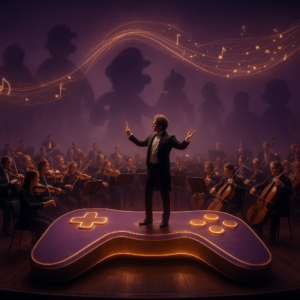
Think about the last time you played a video game and felt your heart race during a boss battle, or found yourself humming a tune hours after putting down the controller. That wasn’t a coincidence. Video game music is one of the most carefully engineered forms of audio in modern entertainment, and it has a profound effect on how you think, feel, and perform — both inside and outside the game.
From the iconic 8-bit bleeps of early arcade machines to the sweeping orchestral scores of today’s blockbuster titles, game music has evolved into a sophisticated psychological tool. And science is beginning to catch up with what gamers have intuitively known for decades: the soundtrack matters more than most people realise.
Why Video Game Music Is Designed to Affect You
Unlike film scores, which are composed to accompany a fixed narrative, video game music must be dynamic and responsive. It has to adapt to what the player is doing in real time — shifting from calm exploration themes to intense combat music within seconds. This is called adaptive audio, and it’s one of the reasons game music is so uniquely effective at triggering emotional responses.
Composers working in the gaming industry are essentially writing music that loops without becoming irritating, escalates tension without losing nuance, and rewards players emotionally at just the right moments. It’s a complex craft, and when it works, it works on a neurological level.
Research has shown that music activates the limbic system — the part of the brain responsible for emotion and memory. Video game music is specifically engineered to keep that system engaged over extended play sessions, which is why certain soundtracks can feel almost indistinguishable from emotional experiences in real life.
The Effects of Video Game Music on the Brain
The relationship between game music and brain function is a growing area of academic interest. Studies have explored how different types of in-game audio influence cognitive performance, stress levels, and emotional states.
Focus and Cognitive Performance
One of the most well-documented effects of video game music is its ability to enhance focus. Many players report that game soundtracks — particularly ambient or lo-fi game music — help them concentrate during tasks outside of gaming altogether. This is why “video game music for studying” has become a genuinely popular search term, with countless playlists on YouTube dedicated to the concept.
The reason behind this is partly rooted in the flow state — a psychological condition of deep, effortless concentration first described by psychologist Mihaly Csikszentmihalyi. Video game music is uniquely effective at facilitating flow because it’s designed to be engaging but not distracting. It provides just enough stimulation to keep the brain active without pulling attention away from the task at hand.
A study published by researchers at Purdue University found that music in video games can significantly influence performance, mood, and physiological arousal. The type of music played — whether it was calm, intense, or neutral — had measurable effects on how players approached challenges and how long they persisted through difficulty.
Emotional Regulation and Mood
Video game music doesn’t just affect your concentration — it actively shapes your emotional state. Games use music strategically to guide players through a full spectrum of emotions: joy, fear, sadness, triumph, and tension. These aren’t passive experiences. The music is pulling emotional levers deliberately.
Consider the haunting piano melodies in The Last of Us, or the sweeping, hopeful orchestration in The Legend of Zelda: Breath of the Wild. These aren’t just background noise — they’re emotional storytellers. When the music swells at a dramatic moment, your brain releases dopamine, the same neurotransmitter associated with pleasure, reward, and motivation.
This dopamine response is the same one triggered by listening to your favourite song. In gaming, it’s often amplified by the sense of personal achievement — you earned that triumphant music by completing a difficult task, which makes the emotional hit even stronger.
Stress and Anxiety Responses
The flip side of emotional engagement is the stress response that certain game music deliberately triggers. Horror game soundtracks, for instance, are masters of psychological manipulation. Dissonant chords, irregular rhythms, and sudden silences are all techniques borrowed from psychological thriller film scoring — and they work just as effectively in games.
Research has found that tense, unpredictable music can raise cortisol levels and increase heart rate — the classic physiological markers of stress. For gaming, this is often a feature rather than a bug. It makes the experience more immersive and emotionally authentic. However, it’s worth being aware of this effect, particularly for players who are already prone to anxiety.
On the other hand, calming game music — think the gentle acoustic guitar of Stardew Valley or the serene ambient tones of Animal Crossing — has been associated with reduced stress and improved mood. Several players and researchers have noted that these games function almost like interactive relaxation tools, with the music playing a central role in that experience.
The Importance of Music in Video Games
It would be easy to assume that gameplay mechanics, graphics, and storytelling are the primary pillars of a great video game — and they are certainly important. But music is the invisible architecture that holds the emotional experience together. Remove the soundtrack from almost any beloved game, and you’ll find the experience dramatically diminished.
Imagine Super Mario Bros. without its iconic theme, or Doom without its relentless heavy metal score. The music isn’t just accompaniment — it’s part of the identity of the game itself. It tells you how to feel before a single word of dialogue is spoken.
Music as a Narrative Tool
Skilled game composers use music to tell stories that visuals and dialogue alone can’t convey. The shift in a character’s leitmotif — a recurring musical theme associated with a specific character — can reveal hidden depths, signal betrayal, or foreshadow tragedy. This is storytelling through sound, and it’s extraordinarily effective.
Games like NieR: Automata, Final Fantasy VII, and Undertale are frequently cited for their exceptional use of music as narrative. Players often report feeling emotional responses to story moments that are inseparable from the music accompanying them. Take the music away, and the moment loses half its power.
The Rise of Video Game Music in Mainstream Culture
The cultural footprint of video game music has grown enormously in recent decades. Orchestral concerts dedicated entirely to game soundtracks — such as the long-running Video Games Live tour and The Legend of Zelda: Symphony of the Goddesses — sell out prestigious venues worldwide. Streaming platforms report hundreds of millions of listens to game soundtracks each year.
This isn’t nostalgia alone. New listeners who have never played the associated games are discovering these soundtracks on their own merit — because they work as standalone music. Composers like Nobuo Uematsu, Yoko Shimomura, and Koji Kondo have become revered figures in the broader music world, not just in gaming circles, much like the artists and records that defined earlier eras of popular music.
According to data from Spotify, video game music streams have grown by over 100% in recent years, with younger audiences in particular gravitating towards game soundtracks for study, relaxation, and exercise. This signals a significant cultural shift in how game music is perceived and consumed.
How Different Genres of Game Music Affect You Differently
Not all game music is created equal, and different styles produce noticeably different psychological effects:
- Ambient and atmospheric music (e.g., Journey, Skyrim) — Tends to promote relaxation, introspection, and a sense of openness. Often used for study or meditation playlists.
- High-energy action music (e.g., Doom Eternal, Metal Gear Rising) — Increases arousal, adrenaline, and motivation. Popular for workouts and high-focus tasks requiring energy.
- Lo-fi and retro chiptune (e.g., early Pokémon, Undertale) — Associated with nostalgia, comfort, and gentle focus. A staple of study music communities online.
- Orchestral and cinematic scores (e.g., The Last of Us, Red Dead Redemption 2) — Evokes complex emotional responses, often tied to in-game storytelling.
- Horror and tension music (e.g., Resident Evil, Silent Hill) — Deliberately provokes anxiety and heightened alertness as part of the immersive horror experience.
Understanding which type of game music suits your current mental state — or the state you want to achieve — can be genuinely useful for managing your mood and productivity outside of gaming contexts.
Practical Ways Game Music Influences Your Daily Life
The effects of video game music don’t necessarily stop when you close the game. Many people actively incorporate game soundtracks into their daily routines:
- Studying and revision: The non-lyrical nature of most game music makes it ideal background audio for reading or writing, as it stimulates the brain without interfering with language processing.
- Exercise and physical training: Energetic game soundtracks can serve as effective workout music, providing rhythmic drive and motivational momentum.
- Relaxation and sleep: Calming game soundtracks — particularly from life-simulation games — are increasingly used as part of wind-down routines.
- Creative work: Artists, writers, and designers often report that game music provides the right balance of stimulation and neutrality for creative tasks.
Conclusion
Video game music is far more than a pleasant backdrop to gameplay. It is a carefully constructed psychological experience, designed to shape emotion, enhance performance, and create lasting memories. The effects of game music on the brain are measurable and significant — influencing everything from dopamine release and emotional regulation to focus and stress responses.
As game soundtracks increasingly find audiences beyond gaming contexts — in study sessions, concert halls, and streaming playlists — it’s clear that this form of music has earned a place among the most impactful audio art of our time. Whether you’re deep in a dungeon crawl or simply looking for the right background music to get through your workday, the science suggests that reaching for a game soundtrack might be one of the smarter choices you can make.